

Foxy Saltwater Tropicals
French Angelfish
French Angelfish
Couldn't load pickup availability
French Angelfish (Pomacanthus paru)
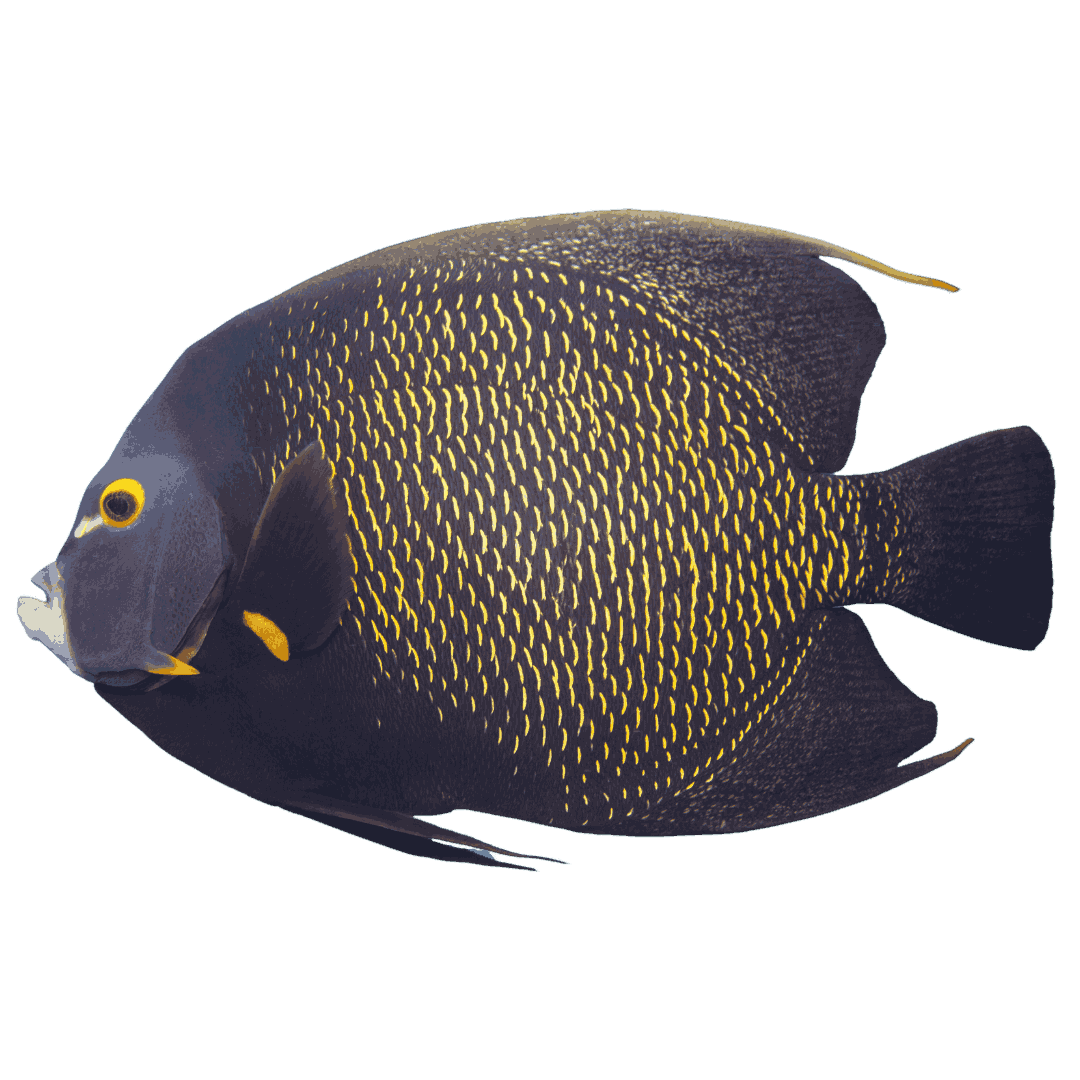
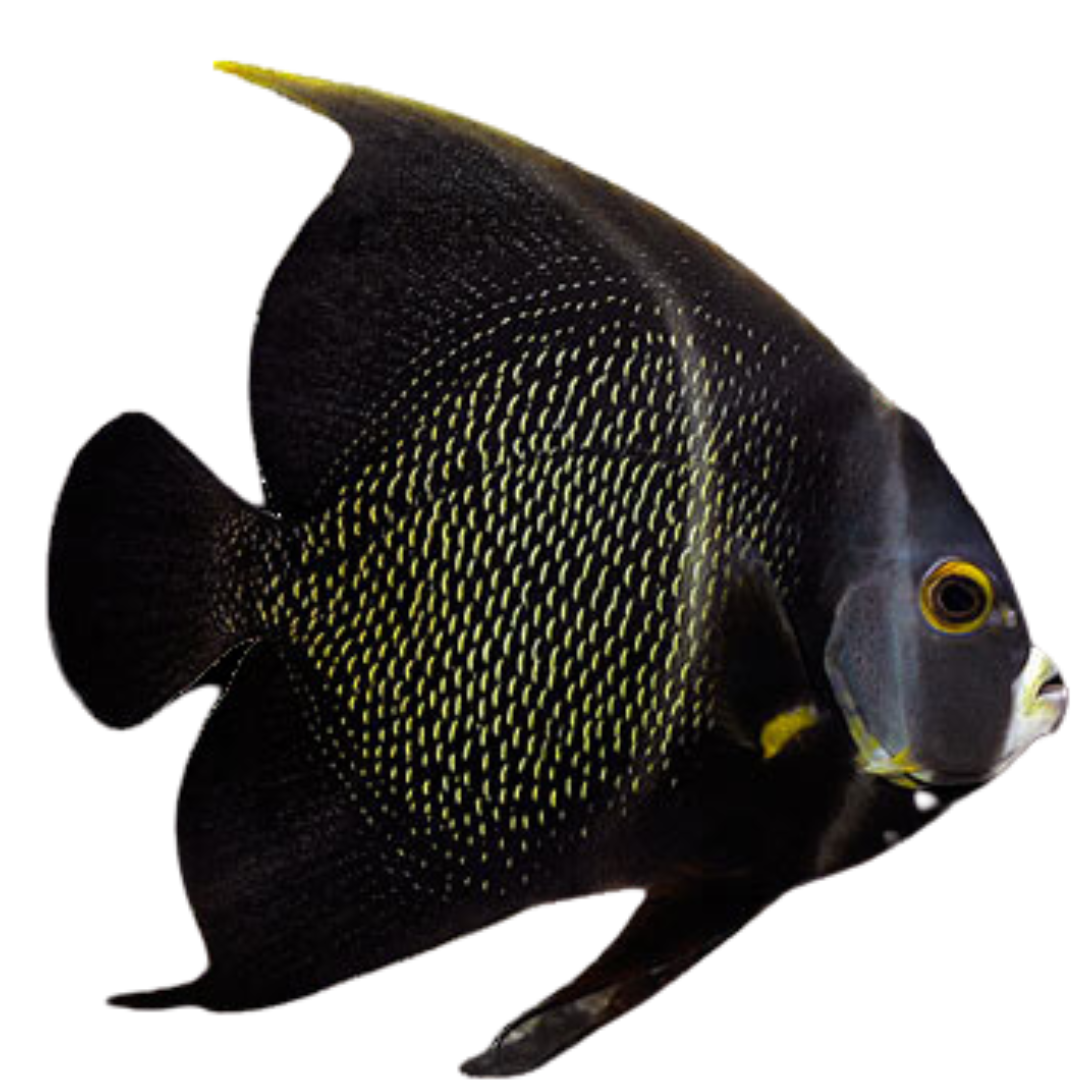
The French Angelfish (Pomacanthus paru) is a beautiful and iconic Caribbean angelfish known for its dark coloration, yellow-gold scale edges, and distinctive markings around the face. Its bold pattern and impressive size make it a spectacular centerpiece for a large saltwater aquarium.
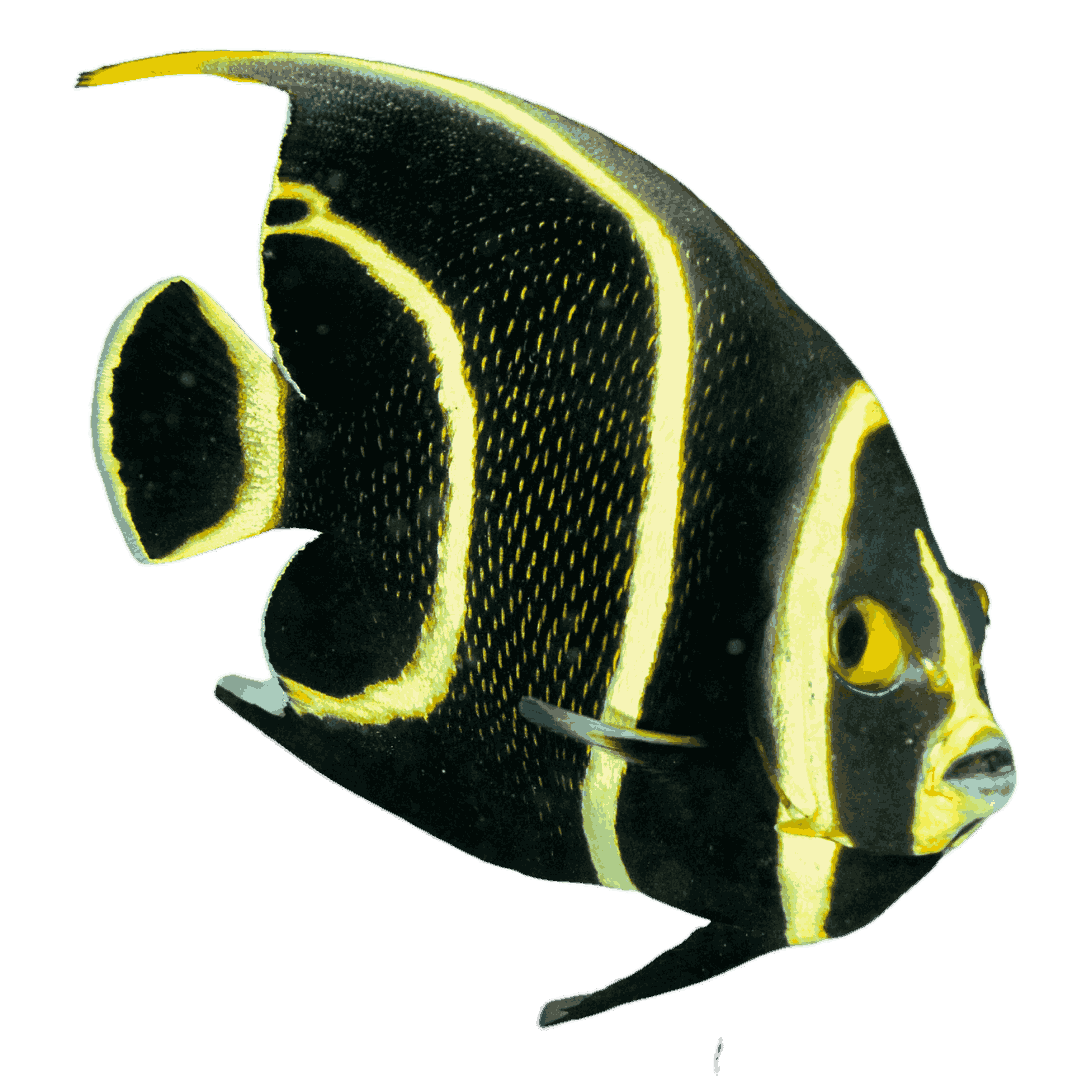
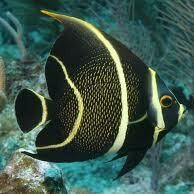
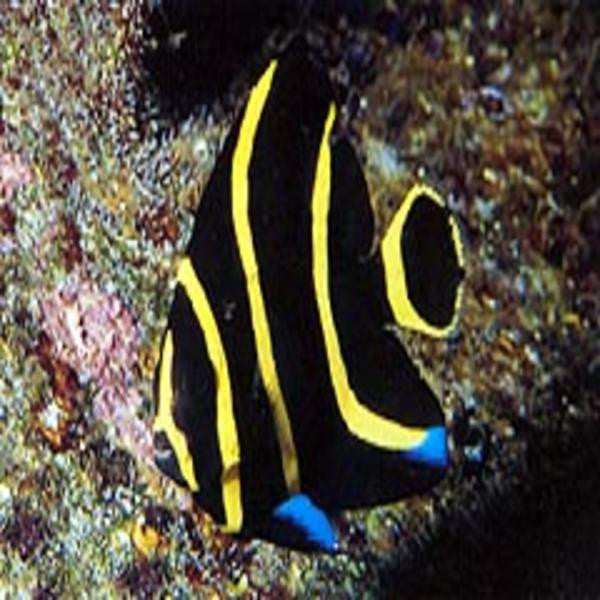
One of the most interesting features of the French Angelfish is its dramatic color change from juvenile to adult. Juveniles are primarily black with several bright, curved yellow stripes running across the body. As they mature, these stripes gradually disappear and the fish develops its adult coloration: a dark brown to nearly black body with yellow-gold edging around the scales and fins.
Native to the Caribbean and Western Atlantic, French Angelfish are active swimmers and grazers that do best in a mature aquarium with plenty of live rock, open swimming space, caves, and hiding places. They are best suited for experienced saltwater aquarists because of their adult size and territorial behavior.
French Angelfish are not reef safe and may nip at stony and soft corals, sponges, and clam mantles. They can become territorial toward other angelfish and similarly shaped fish, but generally do well with appropriately sized tank mates when given adequate space.
A varied diet is important for maintaining their health and coloration. Offer marine algae, spirulina, sponge-based foods, mysis shrimp, brine shrimp, chopped seafood, and other high-quality frozen and prepared foods.
Quick Facts:
- Care Level: Moderate
- Temperament: Semi-Aggressive
- Maximum Size: ~15 inches
- Minimum Tank Size: 180 gallons
- Diet: Omnivore / Spongivore
- Reef Safe: No
- Origin: Caribbean / Western Atlantic
- Collection: Hand Collected
*Please note that some Large French Angelfish may not have fully transitioned to their full adult markings. On occasion, they will have their juvenile stripes still intact.*